

As you navigate your way into a parking lot or along the roads, have you ever paused to consider the importance of those mundane, often overlooked lines marking the asphalt? Or perhaps you've questioned the necessity of these markings inside your child's school, in the local mall, or even along your regular walking track? Believe it or not, these seemingly inconspicuous lines play a remarkable role in maintaining a safe, orderly, and functional society. So, in this post, we’re diving headfirst into the world of line marking, and specifically, the vital role of line marking contractors in upholding safety standards and regulations.
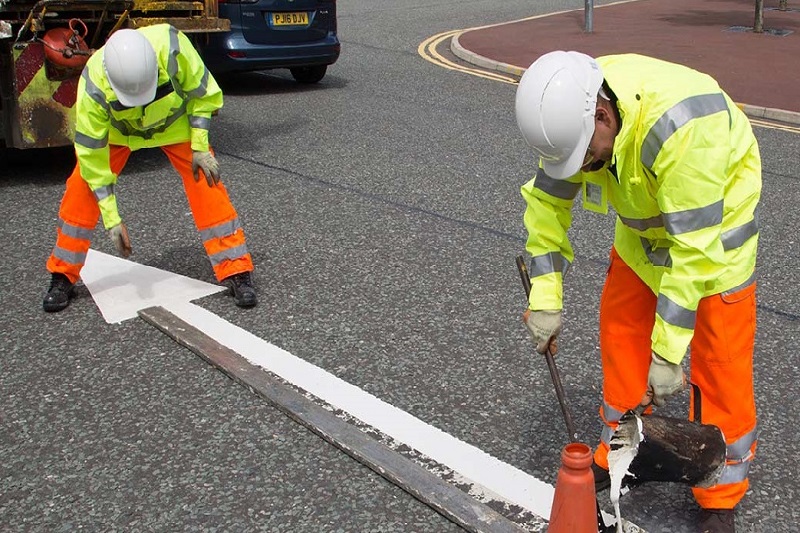
Line marking contractors aren't just wielders of brushes and paint; they exercise precision, understanding, and most importantly, adhere strictly to regulations and safety standards. They are gatekeepers of safety, whose work goes far beyond aesthetic appeal. This complex profession calls for significant skill, attention to detail, and comprehension of local and national guidelines.
In the coming sections, we'll explore why these markings are paramount, the regulations that guide their application, who is responsible for their upkeep and what happens when these standards are not maintained. I hope you’re as excited to explore this often unnoticed, yet vital element of our urban landscapes.
The 'Why' Behind the Lines
Why are those carefully drawn lines in the car park, on the road, or in your local school so significant? Firstly, line markings aid in order, control, and navigation. They also function as critical visual cues that help avoid collisions or accidents. Therefore, line markings are a means of communication, guiding pedestrians and motorists alike.
Secondly, these markings have the power to regulate traffic flow and provide paramount safety information. From directing an emergency exit route to handicapped spaces, the language of lines constitutes an integral part of a functional society.
Last but not least, line markings are instrumental in providing accessibility features. Think about the dedicated spaces for the disabled, the ramps leading to wheelchair-friendly entrances, or tactile surfaces that guide the visually impaired. Their effectiveness and necessity cannot be underestimated.
The Regulations and Guidelines
While the relevance of line markings is evident, it sure doesn't end there; associated with these markings are complex sets of local and national regulations. These regulations define aspects such as the type of paint used, the dimensions and intervals of the lines, even their color and placement. Complying with these guidelines is not a matter of choice but a legal requirement for line marking contractors.
Underlying these regulations is a supportive goal - to achieve uniformity and consistency across all regions, which in turn, strengthens the readability and effectiveness of line marks.
Lastly, these regulations are periodically reviewed and updated to reflect changes in infrastructure, technology, and societal needs. For line marking contractors, staying up-to-date with these guidelines is as important as the marking itself.
Responsibility of Line Marking Contractors
Keeping these essential lines in check, from initial application to maintenance, falls under the purview of line marking contractors. But their role is much broader in scope, encompassing the design of marking plans, dealing with harsh weather conditions and taking care of the necessary paperwork for compliance.
Furthermore, these professionals are responsible for ensuring that their work meets the regulatory requirements while serving its practical functions. Mistakes not only invoke legal implications, but they can also result in accidents and confusion. Importantly, their job is often time-sensitive, needing completion within a narrow timeframe to minimize disruption. This brings yet another layer of complexity to their field.
The Consequences of Negligence
Ignoring these line marking standards and regulations can result in chaos, lead to accidents, and pose serious safety hazards. It can also lead to hefty penalties, lawsuits, and in extreme cases, imprisonment.
When it comes to public safety, negligence has no place. Even minor lapses, like fading lines or incorrect markings, can significantly compromise safety. Regular maintenance and updates are essential to avoid such potential issues and to provide a safe, navigable environment.
Conclusion
Now that we've dug deep into the realm of line marking, it's clear that this field, although widely unnoticed, is a cornerstone of societal functionality. The roles that line marking contractors play are of immense importance. Not only do they provide visual guides and important cues, but they also ensure safety and orderliness by adhering stringently to standardized regulatory guidelines.
In essence, line marking contractors are the unsung heroes of our daily lives, maintaining the invisible guidelines that provide structure and safety to our movements. So, the next time you park your car or walk into your local mall, spare a moment to appreciate the remarkable work behind those simple lines.